
Culture & curiosities · Homemade bread
Homemade bread: the simple ritual of flour and time
Cracking crusts, warm slices, jars bubbling quietly on the shelf and kitchens that smell like Sunday: homemade bread is one of those rituals that costs almost nothing and gives a lot. Here are twelve chapters on flour and starters, kneading and patience, scoring and steam — and on that moment, known to every home baker, when the whole house shows up in the kitchen for no stated reason.
Cultural, evocative text. The photographs are generated illustrations.
Why homemade bread wins people over
A cracked crust that sings when it cools, a warm slice that needs nothing but a little butter, a kitchen that smells like a Sunday for three days straight: homemade bread isn't a recipe, it's a small event. Few things in the kitchen give so much for so little — flour, water, salt, time.
And it never stops working its charm: the first loaf is always photographed, offered to the neighbors, torn apart while still hot even though everyone knows you shouldn't. Baking bread at home brings out something almost childlike — the pride of having made, with two hands, the most basic food there is.
Flour: choosing your base
Every loaf starts with a choice that looks modest and isn't: the flour. All-purpose flour gives a soft, forgiving crumb; bread flour, with more protein, pulls stronger and rises prouder; whole wheat brings a nutty depth that makes white bread seem suddenly shy. Bakers argue about it the way sports fans argue about lineups.
The honest advice heard in every home kitchen: start with what the bag says, not with what tradition demands. A good flour is simply one that's fresh, weighed — never scooped — and used often enough that the paper bag goes soft. Everything else is a matter of taste discovered one loaf at a time.
Yeast or starter: the great divide
There are two families of home bakers, and they recognize each other instantly. The yeast bakers: practical, punctual, bread on the table in an afternoon. The starter bakers: a little evangelical, always talking about feeding schedules, convinced that patience is an ingredient.
Both camps make wonderful bread. Yeast is a tool with an off switch; a starter is more like a slow old stove that needs tending. Beginners are usually better off starting with yeast, learning how dough feels, and meeting sourdough later — the way you learn to swim in a pool before the open sea.
The starter: a pet that lives in the pantry
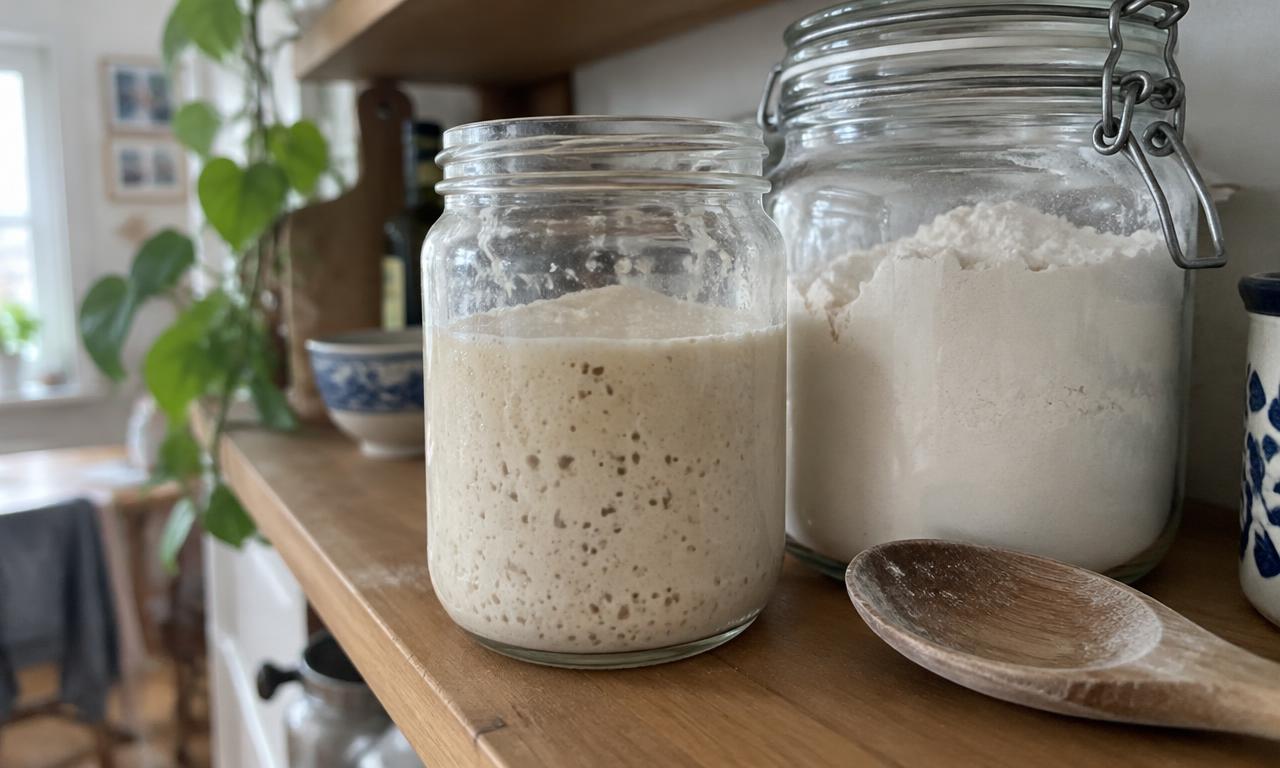
A sourdough starter is flour and water left to become alive: bubbles appear, a sour smell develops, and suddenly the jar demands attention once a day. Families give it names, take it on vacation, divide it among children like an inheritance — and warn guests never to put it in the wrong cupboard.
The wonder is that this cloudy mixture is older than any of us: passed from hand to hand for years, sometimes generations. A starter carries the memory of every loaf it ever made, which is why bakers treat theirs less like an ingredient and more like a slightly demanding family member.
Kneading: trust your hands
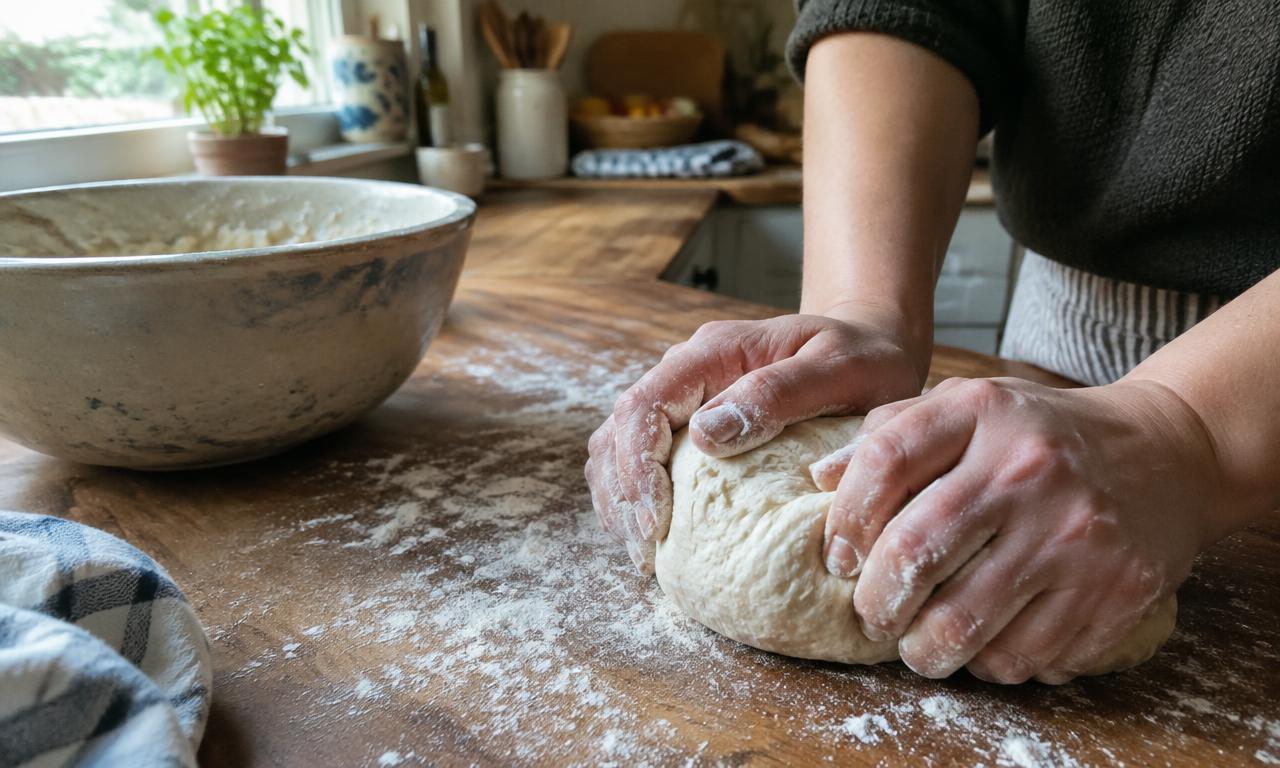
Recipes give kneading times, but experienced bakers knead by feel: the dough starts shaggy and sticky, then slowly turns smooth, springy, and just barely tacky — like a soft earlobe, say the old books, with total confidence. Five minutes too few, and the crumb stays tight; a few more, and it opens like a good conversation.
The no-knead school deserves its fame too: a wet dough left alone overnight does in twelve quiet hours what tired arms once did in twenty minutes. Either way, the lesson is the same — bread forgives almost everything except impatience.
The first rise: patience does the work
The first rise is the part nobody films, because nothing seems to happen. The dough just sits in its bowl, breathing, doubling at its own speed — faster in summer, glacial in winter, always on a schedule written by the room's temperature rather than the clock.
Bakers learn the poke test here: press a floured finger in, and if the dent springs back slowly, the dough is ready. This is also when flavor is built, which is why cold overnight rises have quietly taken over home kitchens — the fridge does the waiting, and the bread thanks you in the morning.
Shaping and the proofing basket
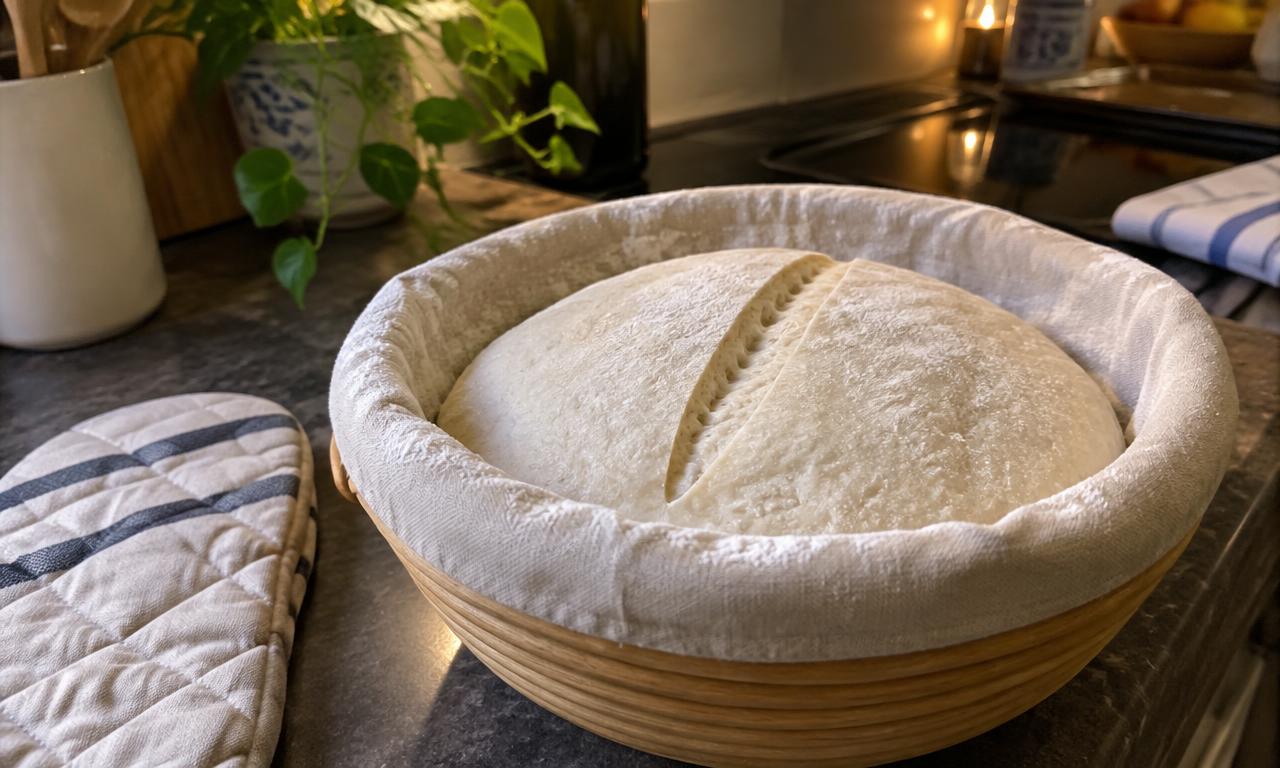
Shaping looks simple and is the quietest craft of all: fold, roll, tuck, tighten the surface until the dough holds itself like a little drum. A wicker basket lined with flour-dusted linen holds the shape through the final rise and presses those beautiful rings into the crust that say, before anyone cuts it, homemade.
No basket? Any bowl and a well-floured tea towel do the same job, which is exactly how it was done for centuries. The basket doesn't make the bread better — it just makes it look like the baker knows exactly what they're doing.
Scoring and steam: the crust decides
Right before the oven comes the one cut that matters: a swift slash across the top that tells the loaf where to open. A lame, a razor, or a firm knife all work — hesitation is the only real enemy, and every baker remembers their first score that turned into a wobble.
Then the trick that separates crackling crusts from sad ones: steam. A covered pot, a pan of hot water, a sprayed mist — for the first minutes, a steamy oven lets the loaf expand fully before the crust sets. That's the whole secret behind the shiny, blistered surface everyone tries to photograph.
The oven: the moment of truth
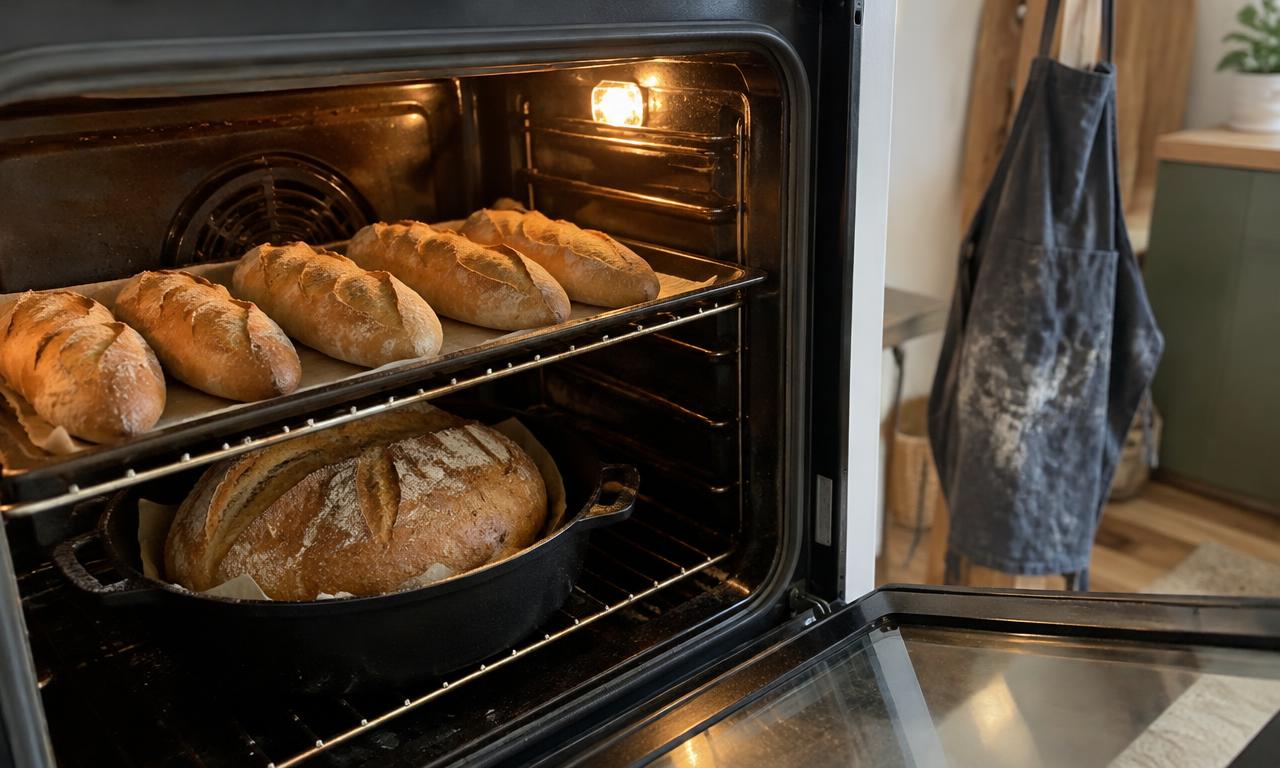
Everything a loaf will become is decided in those first twenty minutes of heat. The crust browns, the slash yawns open, and the kitchen fills with a smell that pulls everyone toward the oven with no particular reason to be there. It's the most reliable event on the home calendar.
Seasoned bakers stop watching the clock here and start listening: crusts crackle as they cool, hollow loaves sound hollow when tapped on the bottom. The loaf tells you when it's done — you just have to be willing to stand there and take its word for it.
The smell that takes over the house
No part of baking is written down more often than this one: the smell. It drifts upstairs, it waits at the front door when you come home, it makes neighbors on the landing suddenly remember you owe them nothing and they owe you nothing and yet here they are, knocking politely.
Real-estate agents supposedly advise baking bread before a viewing, which says everything: the smell of fresh bread means home, safety, someone taking care. It may be the cheapest atmosphere a household can produce, and it never once feels like a trick.
Slicing: the ultimate test
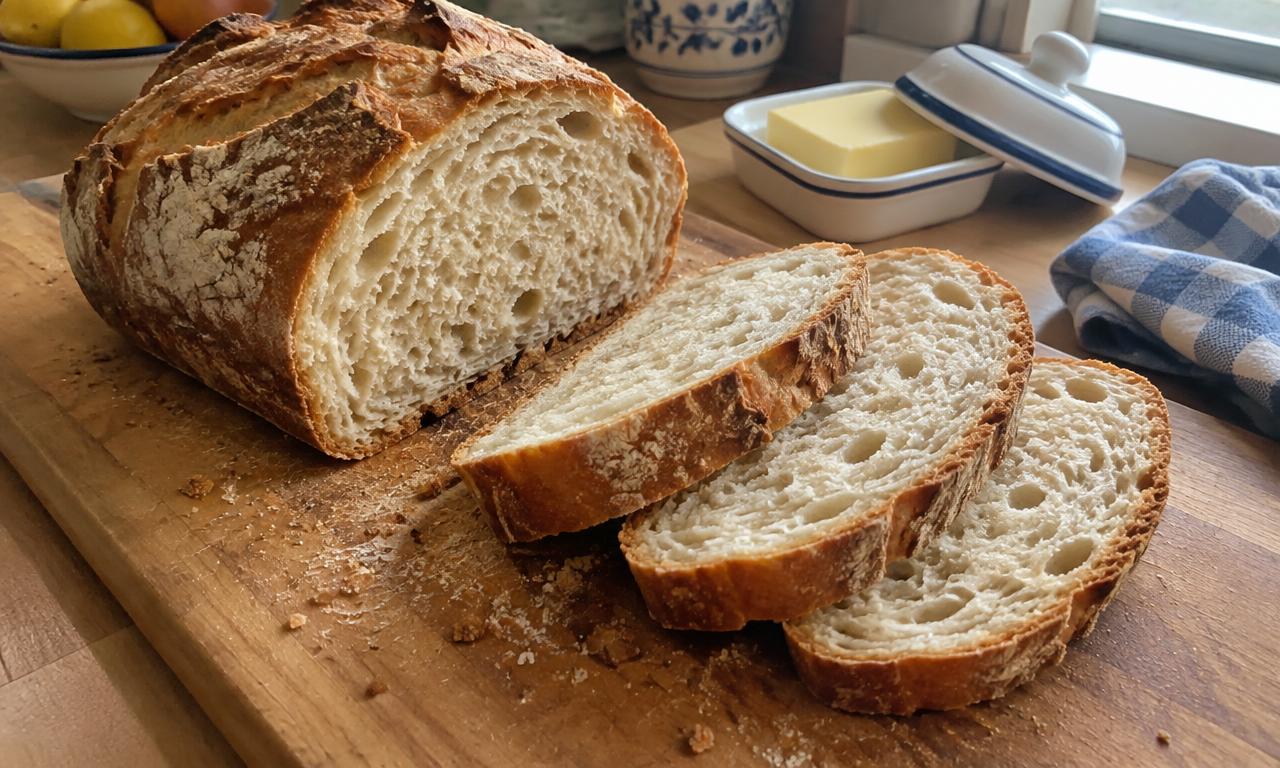
Every baker knows the little suspense of the first cut: did it rise all the way through? Is the crumb open and glossy or tight and sad? The knife saws through the crust with that dry crackle, the interior is revealed, and for a second the whole morning hangs on it.
Then everyone crowds in — a slice while it's still warm, butter melting on contact, opinions forming out loud. The verdict matters less than the ritual: homemade bread gets eaten standing up, over the counter, and the best slice always goes to whoever waited the longest.
Keeping it longer (and using the last slice)
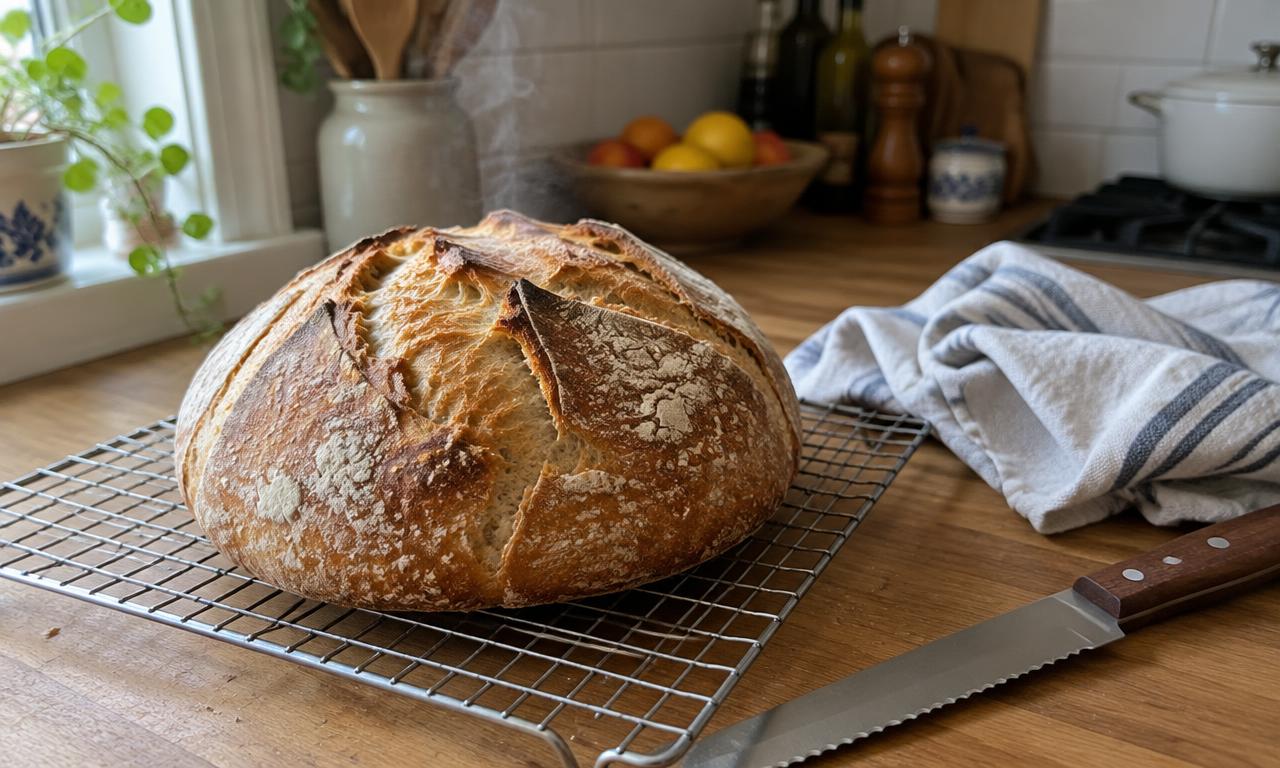
Homemade bread contains no preservatives, which is the polite way of saying it's gone in three days — and somehow that becomes part of the rhythm. A paper bag, a linen cloth, the cut side down on a board: crust stays crust, crumb stays tender, and the freezer takes care of anything that might not be eaten in time.
And the last slice is never wasted: it becomes toast the next morning, croutons for the soup, breadcrumbs in a jar that every organized kitchen keeps. A homemade loaf ends its life usefully, which is more than can be said for most things in the house.
In short
Flour, water, salt and time: homemade bread promises nothing it can't keep and asks for little in return — a bowl, a hot oven, and the patience to let the dough do its slow work. Between the first kneading and the last slice, it fills a kitchen with smells, cracks and small ceremonies that no bakery can sell. Maybe that's the real secret: bread made at home isn't better because of the ingredients. It's better because someone was home.